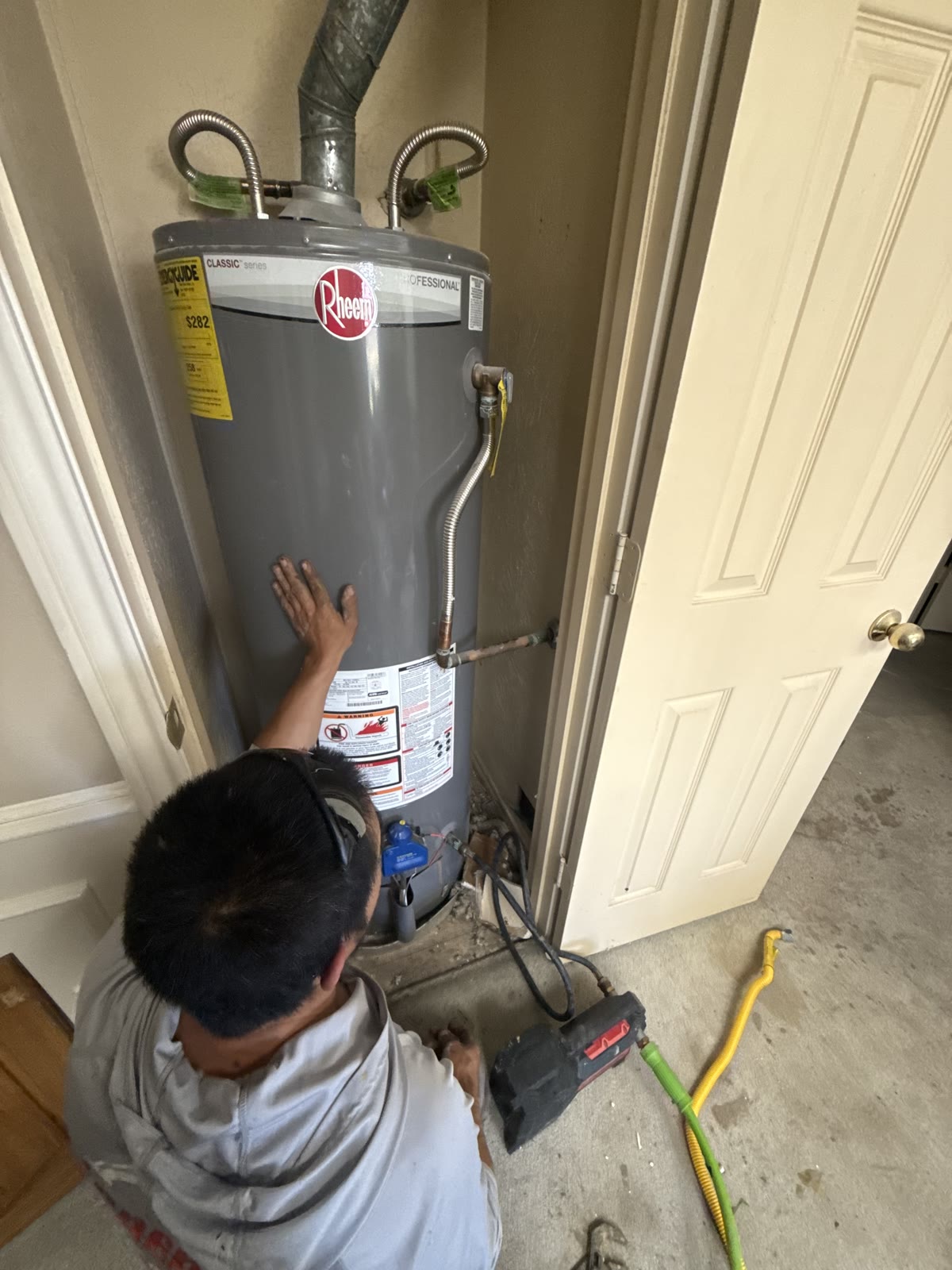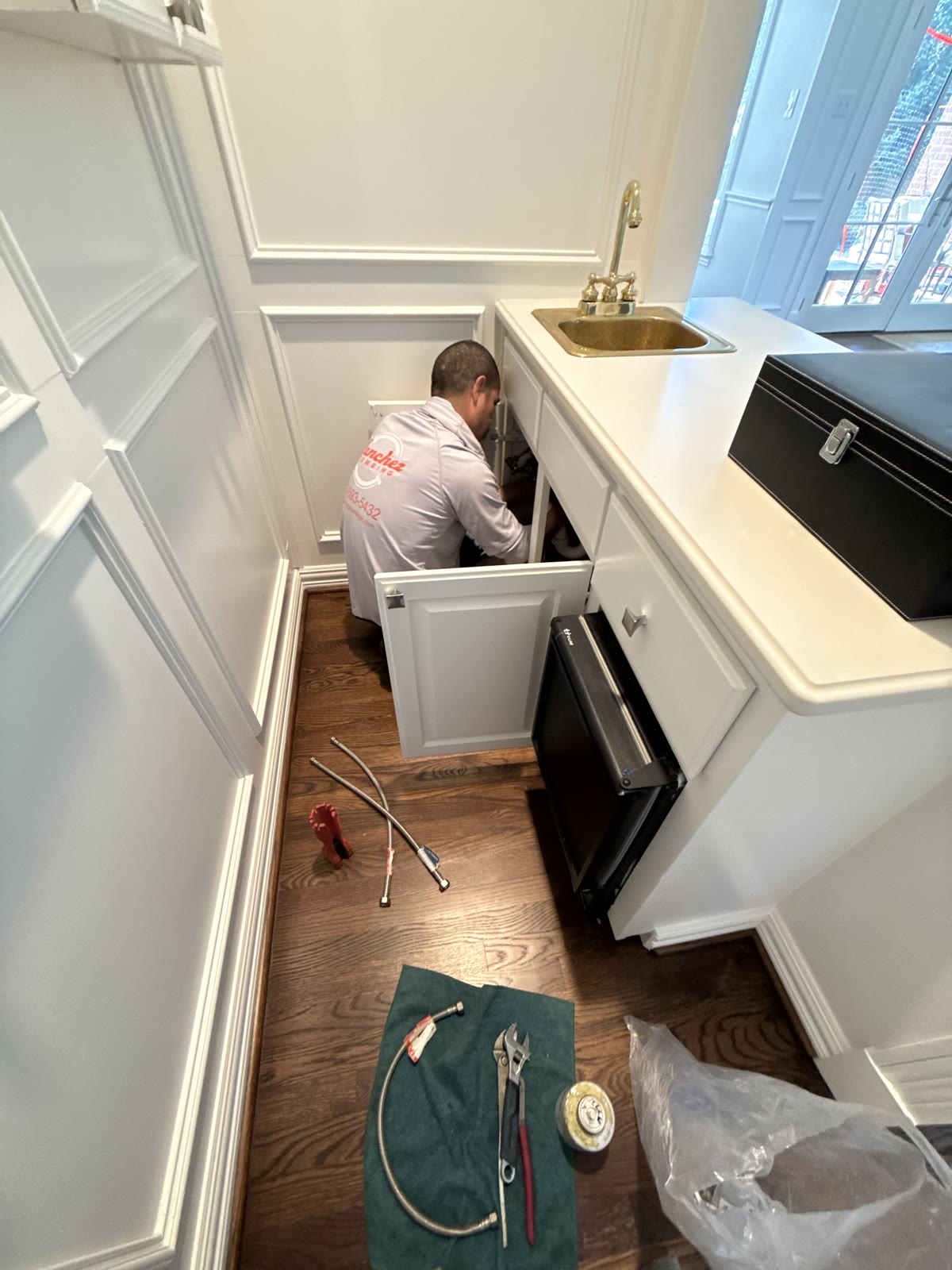
A puddle around your water heater is never good news — but it's not always an emergency, either. Below is the same diagnostic checklist our crew runs through when we get a "my water heater is leaking" call here in the DFW metroplex.
First: Is it actually a leak?
Before assuming the worst, check the obvious culprits. Condensation on a cold-water inlet line, a sweating cold floor in summer, or runoff from the air handler upstairs can all mimic a tank leak. Wipe everything down and watch for 30 minutes. If water comes back, it's a real leak — keep reading.
The 7 most common causes
1. Drain valve dripping at the bottom
The plastic drain valve at the base of the tank is the cheapest thing to replace and one of the most common slow leaks. A small bead of water at the valve usually means the gasket inside has failed. We swap these in 15 minutes.
2. T&P relief valve discharging
The temperature & pressure relief valve on the side of the tank vents water if the tank is overheating or over-pressurized. If you see water dripping from the discharge tube, don't cap it — that's a safety device. Call us and we'll diagnose whether it's the thermostat, the expansion tank, or the valve itself.
3. Cold or hot water supply fitting
The two threaded fittings on top of the tank loosen over time, especially with thermal cycling. Tighten with two wrenches (one on the nipple, one on the union) and check for thread sealant. If it still drips, it likely needs to be re-doped with paste and Teflon.
4. Tankless heater isolation valves
If you have a tankless unit, the most common leak point is the service valves. Cartridge gaskets dry out — particularly with our hard DFW water — and start to weep. Easy fix: rebuild the valve.
5. Anode rod port
The anode rod port on the top of the tank can leak if the rod was replaced and the threads weren't properly sealed. This is uncommon if your tank's never been serviced, but a giveaway that someone's been inside the unit before.
6. Heat exchanger crack (tankless)
If you've owned a tankless unit for 15+ years and you're seeing water under the unit with no obvious source, the heat exchanger may be failing. This is usually a replace-the-unit situation.
7. The tank itself has corroded through
This is the bad one. If water is coming from the bottom of the tank — not a fitting, not the drain valve, but actually weeping out of the steel — the tank's internal lining has failed and the unit is done. There's no patching it. Time for a replacement.
What to do right now
- Shut off the cold water supply to the tank (the valve on the cold side, top of unit).
- Shut off power: gas units, turn the gas valve to OFF; electric units, kill the breaker.
- Open a hot tap somewhere in the house to relieve pressure.
- Call a plumber. Even a slow leak gets worse fast, and you don't want a 50-gallon failure when you're at work.
When to repair vs. replace
| Age of tank | Recommendation | |---|---| | Under 6 years | Repair almost always | | 6–10 years | Repair if the cost is under 40% of replacement | | Over 10 years | Replace — the next failure is around the corner |
The DFW factor
Our hard groundwater is rough on water heaters. Sediment build-up insulates the heating element from the water, the burner runs hotter, and the tank fails earlier than the warranty suggests. We typically recommend a flush every 12 months for tank units and every 18 months for tankless to extend life.
Need a plumber today?
If your water heater is actively leaking, don't wait. Call us at (972) 693-5432 — most water heater calls in the DFW metroplex are dispatched within the hour, and we usually have a replacement on the truck.