After Winter Storm Uri in 2021, every Texan knows what a hard freeze can do. We've spent the last few winters helping homeowners not repeat that experience. Here's the actual checklist our crew runs at their own houses every November.
A week before the freeze
Locate (and label) your shutoff valves
The single most important thing in a freeze emergency is being able to shut the water off in under 60 seconds. Find:
- Your main water shutoff (usually in the front yard near the meter, or in the garage)
- Your water heater shutoff (cold water inlet on top of the tank)
- Individual fixture shutoffs under sinks and behind toilets
Tape a label on the main shutoff. Take a photo of it and put it in a "Home" album in your phone where everyone in the house can find it.
Insulate exterior pipes
Hose bibs, exposed copper in the attic, and anything in an unheated wall need foam insulation. The slip-on foam tubes from any hardware store are cheap insurance. For exterior bibs, the styrofoam dome covers work great.
Disconnect garden hoses
A hose left attached to a bib traps water at the spigot — that water freezes, expands, and cracks the bib behind the wall. Every February we replace dozens of these.
Service your water heater
A clogged or sediment-heavy tank works overtime in the cold. Have it flushed before the first freeze.
24–48 hours before the freeze
Open cabinet doors
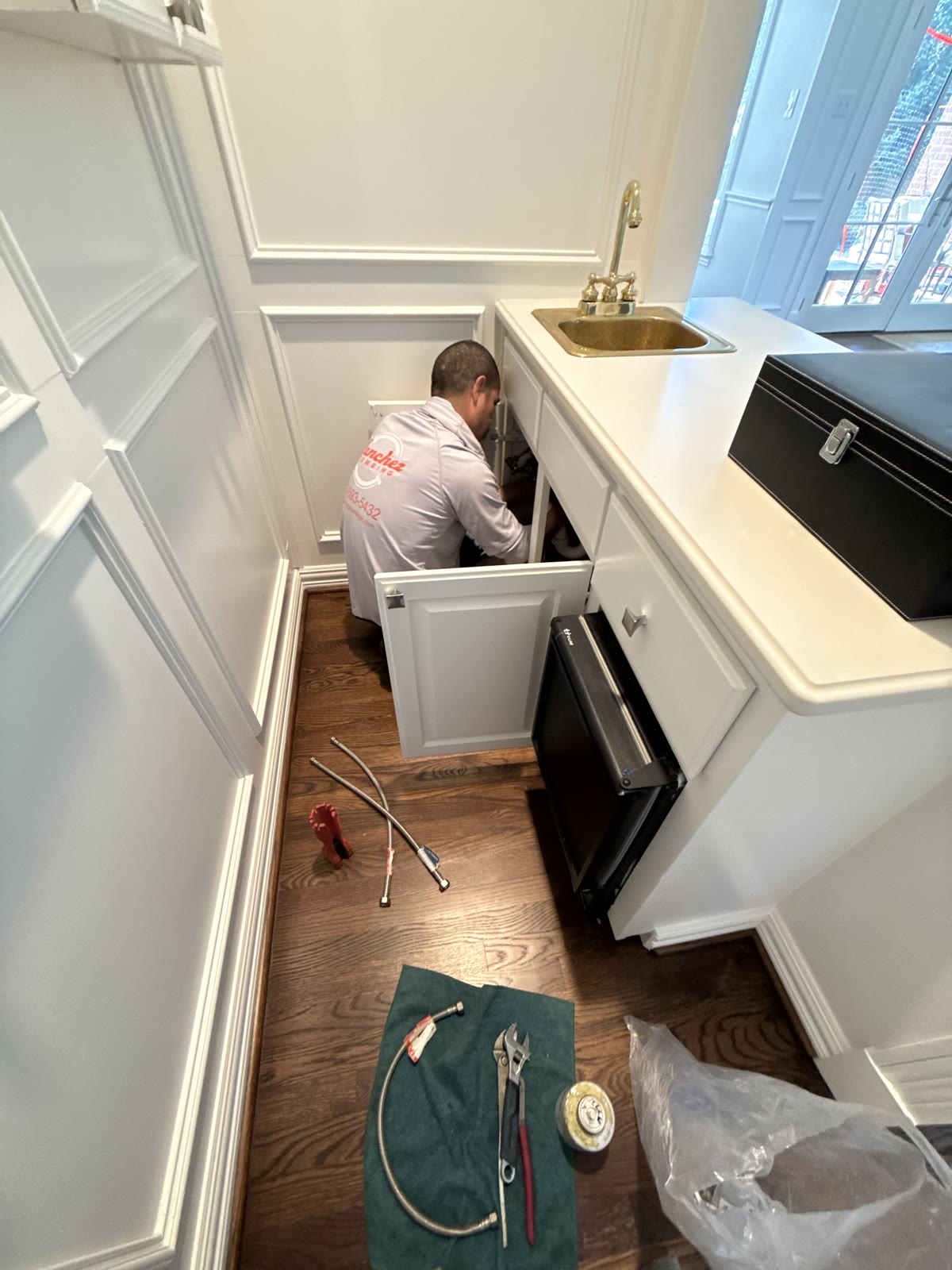
Under-sink plumbing on exterior walls is the most common burst point in DFW. Open the cabinet doors so room air can circulate around those pipes.
Drip your faucets
Set every faucet on the exterior wall side of the house to a slow drip — both hot and cold. Moving water doesn't freeze as easily, and an open faucet relieves the pressure if a downstream pipe does freeze.
Heat the space
Don't drop your thermostat below 60°F, even if you're traveling. The cost of an extra few degrees is nothing compared to a burst pipe.
Seal exterior penetrations
Walk the exterior of your house and look for gaps where pipes enter — under hose bibs, around AC linesets, by the gas meter. Spray foam or caulk seals them up.
The freeze itself
Know how to shut off the main
If you hear a hissing sound, see ice on a wall, or notice a sudden pressure drop — shut off the main immediately. Open every faucet to drain the system.
Don't use a torch on frozen pipes
We've been called to too many house fires that started with someone trying to thaw a pipe with a propane torch. Use a hair dryer, a heat gun on low, or warm towels. Never an open flame.
Watch for pressure drops
If pressure suddenly drops at your fixtures, you almost certainly have a burst somewhere. Turn off the main and start checking — especially in attics and exterior walls.
After the freeze
Don't restore power to a frozen water heater
If your tank water heater froze (rare but possible if power was out), don't restore the gas or electric until a plumber confirms the lines aren't fractured. A burst on the cold inlet during refill is a flooding event waiting to happen.
Re-inspect every fixture
Walk every faucet, valve, and hose bib. Look for slow drips you didn't have before. Check the attic for water staining on insulation.
Schedule a post-freeze inspection if you suspect damage
Some freeze damage is invisible — a hairline crack that weeps for weeks before it bursts. If your house was without heat for any length of time, get it checked.
The DFW reality
Our infrastructure isn't built for hard freezes. Pipes in attics, on exterior walls, and on the slab edge are all exposed in ways that homes in Minnesota wouldn't tolerate. Every prep step above is worth doing even if the forecast looks mild — because in DFW, the forecast is wrong half the time.
Burst pipe? Call us.
If you're already in trouble, don't wait. Call (972) 693-5432 — we run extra crews during freeze events and we'll get to you as fast as we can.